Nutrition Education Works… So Why Aren’t We Doing More of It?
Common Misconceptions on Food Education, Debunked
Research consistently shows that when children have hands-on experiences with food, like cooking, tasting, touching, and exploring, they are more likely to try and enjoy fruits and vegetables. Yet despite what we know works, most children still are not eating enough vegetables. Many young children consume vegetables far less often than recommended, highlighting a major gap between research and practice.
So what’s missing?
Despite growing evidence, many schools still view hands-on nutrition education as extra, expensive, or disconnected from academics. In reality, food education can become a powerful part of everyday learning when it’s designed for the classroom.
Here are five misconceptions we hear all the time.
Misconception #1: “Kids don’t even like vegetables - it’s a waste of time”
It’s true, kids may not like vegetables… yet.
Children are naturally wired this way: evolutionarily, they are drawn to sweet flavors and often reject bitter or sour ones (which describes a lot of vegetables). But that’s a developmental starting point, not a fixed preference.
The good news? Repeated, positive exposure can shift those instincts. When children get to touch, smell, and help prepare food, their curiosity kicks in. A strange raw carrot on a plate is very different from a carrot they helped peel, chop, and turn into something they’re proud of.
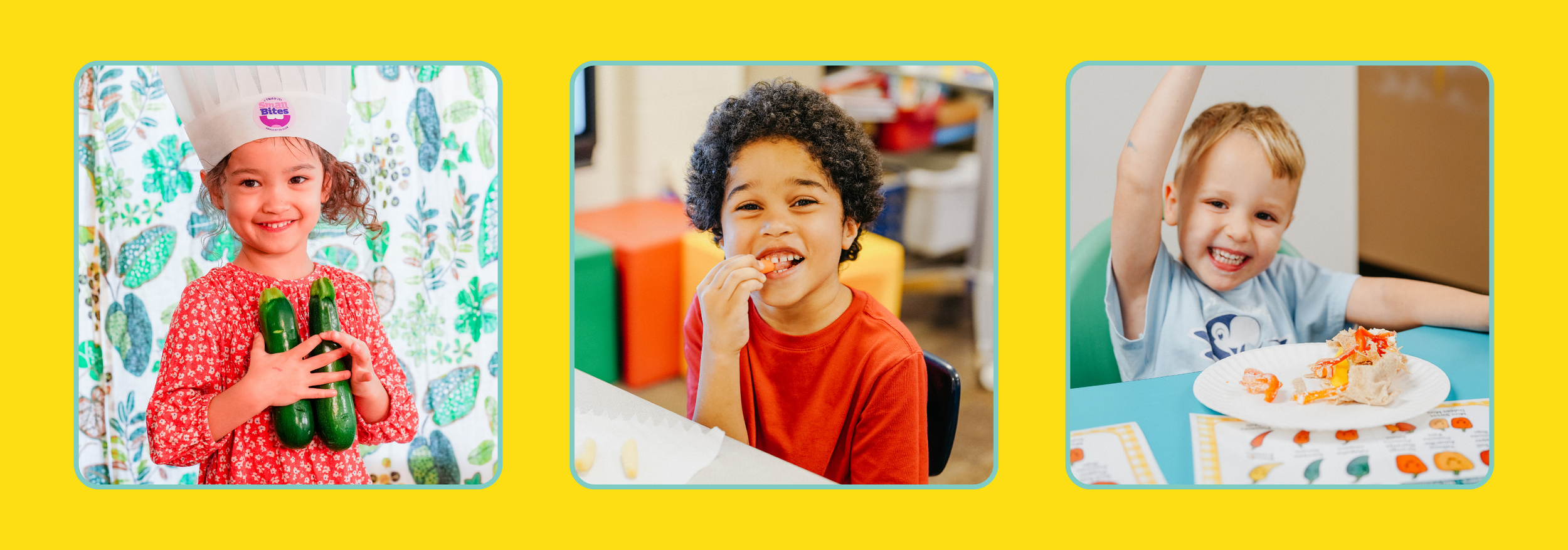
These smiles say it all:
Misconception #2: “Nutrition Education does not support academic achievement"
Have you ever made pancakes and accidentally added 1 tablespoon of salt instead of a teaspoon? Fractions matter! When children cook, they aren’t stepping away from academics; they’re actively practicing them.
Measuring ingredients builds math skills.
Following a recipe strengthens sequencing and reading comprehension.
Describing flavors supports vocabulary and language development.
Fine motor skills, teamwork, problem-solving, and critical thinking are all part of the experience. Hands-on cooking is one of the most natural ways to bring academic standards to life instead of teaching them in isolation.
Misconception #3: “It’s the parent’s job - not the school’s.”
Parents play a huge role in their child’s health. However, kids spend up to 8 hours a day at school and eat a large portion of their daily calories there too. If we believe food education matters, then schools have a role to play.
The good news is that food education at school doesn’t replace parents — it supports them. Trying new foods at home can feel stressful and emotional. At school, it’s playful, social, and low-pressure. We call this the “Power of Peers”, kids are much more likely to try something new when they see their classmates doing it too.
Schools also have the ability to reach all children consistently, regardless of what foods or cooking experiences they have at home. And when kids get excited about food at school, they often bring that excitement home with them. The best food education doesn’t compete with families — it helps connect school and home.
Misconception #4: “It costs too much.”
Food and nutrition education doesn’t have to mean expensive kitchens or complicated cooking projects. While we love hands-on cooking, food education can also look like examining food labels, leafing through seed catalogs (which are often free!), tasting one simple fruit or vegetable, or sorting seeds by color and size.
The goal isn’t perfection, it’s exposure. Small, consistent experiences with food can make a big impact over time.
At Small Bites, we design recipes around seasonal produce, ingredients commonly found in school cafeterias and local grocery stores, and foods that are both affordable and nutrient-dense – keeping costs low and predictable. On average, the fresh produce for a Small Bite Recipe Activity costs just $10 per class.
And for classrooms where even modest costs are a barrier, we're proud to offer scholarships and financial support, made possible by generous funders like the Atlanta Falcons Youth Fund who share our belief that every child deserves access to hands-on food education.
Misconception #5: “Nutrition Education takes too much time!”
Teachers are the busiest people on the planet! So of course, we can’t expect them to devote all day to nutrition education. Nutrition education doesn’t have to take hours of prep or a major schedule change. It can include activities such as reading books about food and farmers, watching short videos, or combining a cooking lesson to reinforce an academic standard.
At Small Bites, we are very sensitive to teachers’ time and provide step-by-step lesson plans, offer live orientations, and share ready-to-use materials so you spend less time prepping and more time adventuring with your students. The school Librarian at Calcasieu Parish, LA agrees!
Ready to bring Small Bites to your students?