Food education and literacy have more in common than you might think! Exploring fruits and vegetables gives young children opportunities to build vocabulary, recognize letters, practice listening, and develop early reading and writing skills. For educators, food education offers a hands-on way to reinforce literacy through everyday classroom activities.
Here are three ways food education supports early literacy development:
1. Builds Vocabulary and Communication Skills
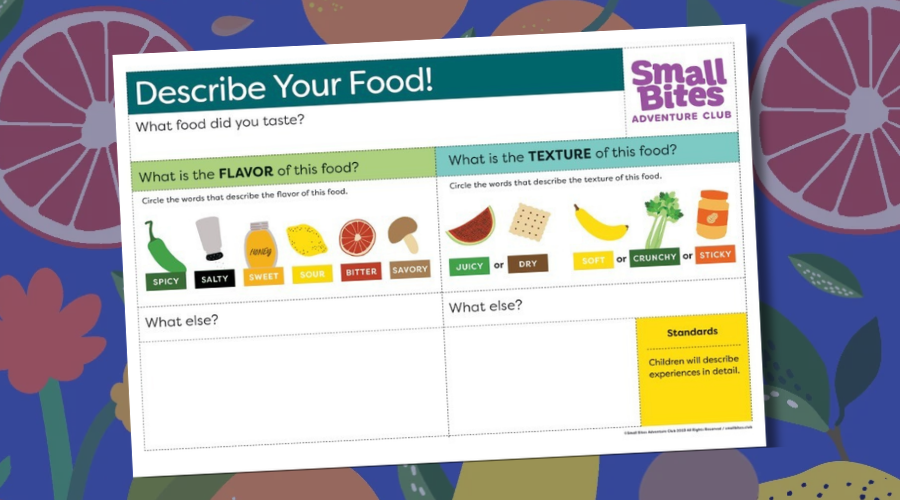
Describing a fruit or vegetable encourages children to move beyond simple words like “good” or “bad.” When children explore foods using all five senses, they practice using descriptive language to communicate what they observe. Is the apple crunchy? Is the lemon sour? These conversations introduce new vocabulary and help children express their thoughts with greater detail.
Try it: Invite students to describe a fruit or vegetable using three words before and after tasting it. Encourage them to notice how their descriptions change!
2. Strengthens Listening Skills
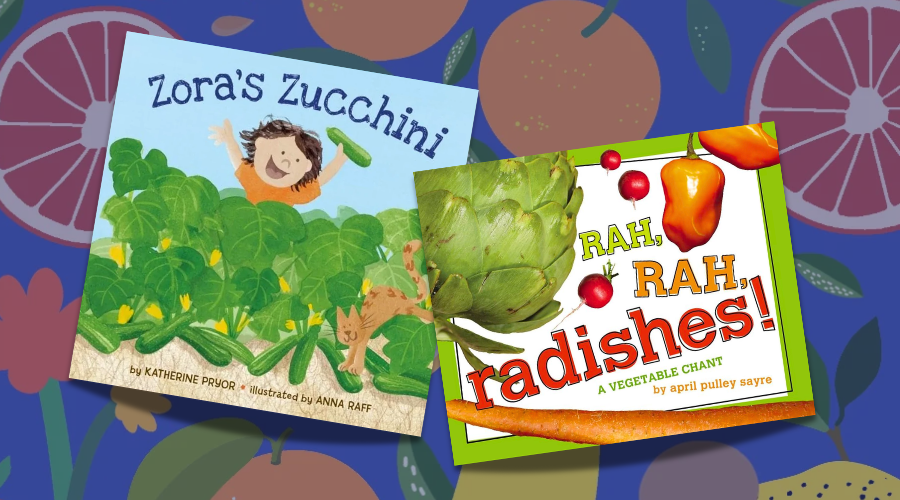
Reading nutrition-focused books, singing songs, and participating in food-themed activities give children opportunities to practice listening and following directions. Songs and chants also help children recognize patterns in rhythm, volume, and pitch.
Try it: Read a picture book featuring fruits or vegetables, then ask students to listen for a particular food as you read. Check out our Book Nook for recommendations >>
3. Encourages Early Writing and Comprehension
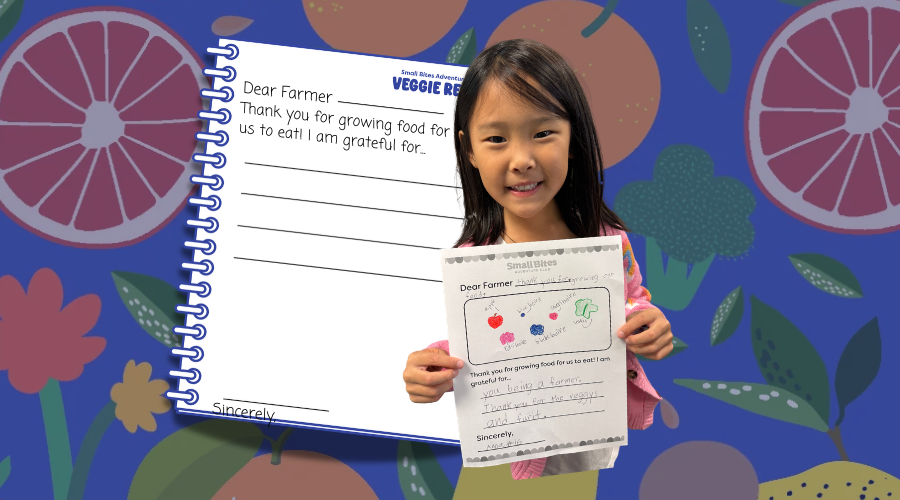
Drawing, labeling, and writing about food help children communicate ideas in different ways. After reading a story or exploring a new food, children can recall details, describe what they learned, and connect new information to their own experiences. These activities help children practice comprehension while building early writing skills.
Try it: Lead your class through our Thank You Farmer Activity. Ask students to draw or write why they are thankful to farmers, whether for growing fruits and vegetables, caring for animals, or helping feed their families.
By connecting literacy with the foods children see, touch, smell, and taste, educators can make learning more engaging, memorable, and relevant to everyday life. These small bites of learning can add up to big steps in literacy development!
Thanks to Tristan Forbes for your support in writing this blog! Tristan is a Dietetic Intern from Emory University Hospital in training to become a Registered Dietitian! She holds a Bachelor’s degree in Dietetics and is completing a Master’s degree in Community Nutrition from the University of Georgia. Tristan is enthusiastic about empowering others to lead happy and healthy lives eating food they know and love.